Address
Level 8/25 Restwell Street, Bankstown NSW 2200, Australia
Business Hours
Monday to Friday: 10AM - 6PM
Weekend: CLOSED
USD$195.00 (GST excl.)*GST applies to Australian residents only
Transform Environmental Data into Responsible AI Action for Healthier Ecosystems, Sustainable Resources, and Resilient Communities.
The AI+ Environment Practitioner certification equips learners with the knowledge and practical skills to apply artificial intelligence to environmental monitoring, conservation, and sustainable resource management. The program covers environmental science foundations, environmental data sources and ethics, biodiversity conservation, pollution monitoring, sustainable agriculture, land-use analysis, climate risk prediction, disaster response, responsible AI, and environmental AI agents.
The AI+ Environment Practitioner certification equips learners with the knowledge and practical skills to apply artificial intelligence to environmental monitoring, conservation, and sustainable resource management. The program covers environmental science foundations, environmental data sources and ethics, biodiversity conservation, pollution monitoring, sustainable agriculture, land-use analysis, climate risk prediction, disaster response, responsible AI, and environmental AI agents.
Learners need a basic understanding of environmental concepts, including ecosystems, biodiversity, pollution, climate change, conservation, and sustainability. Familiarity with AI and machine learning fundamentals, spreadsheets, charts, and environmental data interpretation is also expected, along with an understanding of percentages, averages, comparisons, and correlations. Learners need to be comfortable using web applications, uploading datasets, and navigating maps and dashboards. Awareness of privacy, fairness, transparency, human oversight, and the environmental impacts of digital technologies is also expected.










| Format | Online, self-paced |
|---|---|
| Duration | Instructor-Led: 1 Day (live or virtual) |
| Exam | Proposed standard format: 50 questions, 70% passing, 90 minutes, and online proctored exam. |
| Included | Instructor-led OR Self-paced course + Official exam + Digital badge |
| Prerequisites | Learners need a basic understanding of environmental concepts, including ecosystems, biodiversity, pollution, climate change, conservation, and sustainability. Familiarity with AI and machine learning fundamentals, spreadsheets, charts, and environmental data interpretation is also expected, along with an understanding of percentages, averages, comparisons, and correlations. Learners need to be comfortable using web applications, uploading datasets, and navigating maps and dashboards. Awareness of privacy, fairness, transparency, human oversight, and the environmental impacts of digital technologies is also expected. |
| Delivery | Projects & case studies |
| Outcome | Industry-recognized credential + hands-on experience |

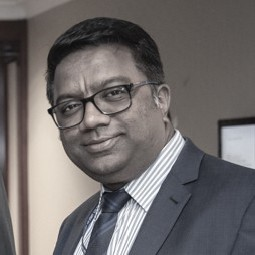
Chandra has a long-standing record of professionalism and integrity in the Vocational and Higher education sectors in Australia spanning over 2 decades. He holds a Master’s Degree in Computer Science and a Bachelor’s degree with Distinction in Information Technology majoring in software engineering, and is also a certified trainer & qualified assessor.
He has served in key roles in various organisations across both the higher education and vocational sectors which include Vice President, Academic Director, Deputy Principal, Director of Studies, Managing Director and Marketing Director. He has also set up and managed his own fully accredited RTO.
Chandra is managing and overseeing the entire operations of The Business School, both onshore and offshore for the VET and ELICOS sectors. Some of these would include marketing, student recruitment, IT, admissions, student support departments as well as coordinating with the Director of Studies and the Academic Manager to ensure competency and quality are maintained across academics, trainers, and teachers.
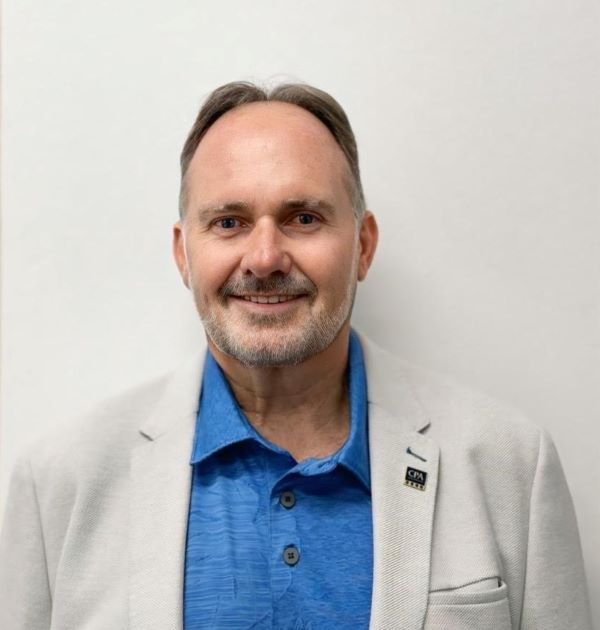
Christopher is a future-focused educator and global business leader committed to reshaping how people learn, upskill and succeed. Driven by innovation, he combines technology, digital learning design and real-world industry insight to build powerful, future-ready education solutions.
As Director General of the World Certification Institute and an experienced Company Director, he leads international initiatives that set global standards, strengthen professional capability, and open new pathways for learners across Asia and beyond. His work bridges education and enterprise — helping organisations transform their workforce and individuals gain the skills and confidence to thrive in a changing world.
With qualifications including BCom, GradDipEd, MBA, FCPA, WCMP and FWCI, I bring deep expertise in business strategy, financial governance and competency-based learning.
Christopher is passionate about using technology to enhance the learning journey, create equitable access to skills, and promote lifelong learning for all.
Our mission is simple: to empower people with the knowledge, tools and opportunities they need to succeed — today and into the future.
For any further details, please fill in the enquiry form below to reach us.