Address
Level 8/25 Restwell Street, Bankstown NSW 2200, Australia
Business Hours
Monday to Friday: 10AM - 6PM
Weekend: CLOSED
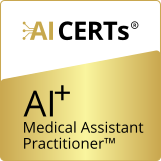
USD$195.00 (GST excl.)
Formerly known as AI+ Medical Assistant™
Revolutionize Healthcare Support with AI-Powered Medical Assistance
A basic understanding of medical terminology, foundational AI and machine-learning concepts, data analytics skills for interpreting medical data, proficiency in programming languages like Python, and knowledge of healthcare systems and clinical workflows are essential for this course.










9 modules
| Format | Online, self-paced |
|---|---|
| Duration | Instructor-Led: 1 day (live or virtual) |
| Exam | 50 questions, 70% passing, 90 minutes, online proctored exam |
| Included | Instructor-led OR Self-paced course + Official exam + Digital badge |
| Prerequisites | A basic understanding of medical terminology, foundational AI and machine-learning concepts, data analytics skills for interpreting medical data, proficiency in programming languages like Python, and knowledge of healthcare systems and clinical workflows are essential for this course. |
| Delivery | Projects & case studies |
| Outcome | Industry-recognized credential + hands-on experience |
New courses are being added every month !!!

Explore artificial intelligence, machine learning, generative AI, robotics, process automation, computer vision, natural language processing and autonomous technologies transforming business and society.
Now Open
Develop professional skills in leadership, personal branding, entrepreneurship, networking, negotiation, career transitions, freelancing, portfolio development, and workplace communication.
Now Open
Develop expertise in network security, cloud security, ethical hacking, cyber defence, data protection, identity management, threat intelligence, and governance frameworks that protect organisations and individuals.
Now Open
Build capabilities in data analytics, data science, business intelligence, databases, predictive modelling, big data platforms and information systems that drive smarter decisions and measurable impact.
Now Open
Strengthen study skills, academic writing, research methods, digital literacy, instructional design, AI-enhanced learning tools, tutoring strategies, and lifelong learning pathways.
Now Open
Strengthen the foundations of sustainable enterprise. Build capability in accounting systems and information flows, audit and risk awareness, compliance management, and governance principles that support decision-making.
Now Open
Build practical knowledge in workplace safety, risk awareness, personal wellbeing and healthy work practices — with flexible learning that can be applied in everyday professional and personal settings.
Now Open
Drive operational excellence from concept to customer. Explore procurement and supplier management, supply chain logistics, lean operations, and value optimisation — built for efficiency and performance.
Now Open
Turn creativity into visual impact. Learn digital photography, lighting, composition, editing tools, content creation, visual storytelling, mobile photography, drone photography, and media production fundamentals.
Now Open
Build knowledge in athletic development, sports performance fundamentals, coaching principles, sports psychology basics, fitness training, event coordination, and recreational leadership.
Now Open
Shape long-term success through people and strategy. Develop skills in leadership and social influence, HR and talent practices, organisational management, change and transformation, and sustainability-aligned planning.
Now Open
Integrating the principles of Sustainable Supply Chain Management (SSCM) into learning, collaboration, and capability‑building. We recognise that modern supply chains are no longer defined solely by logistics, procurement, and operations — they are ecosystems shaped by ethical sourcing, environmental stewardship, circularity, and transparent governance.
Now OpenChandra has a long-standing record of professionalism and integrity in the Vocational and Higher education sectors in Australia spanning over 2 decades. He holds a Master’s Degree in Computer Science and a Bachelor’s degree with Distinction in Information Technology majoring in software engineering, and is also a certified trainer & qualified assessor.
He has served in key roles in various organisations across both the higher education and vocational sectors which include Vice President, Academic Director, Deputy Principal, Director of Studies, Managing Director and Marketing Director. He has also set up and managed his own fully accredited RTO.
Chandra is managing and overseeing the entire operations of The Business School, both onshore and offshore for the VET and ELICOS sectors. Some of these would include marketing, student recruitment, IT, admissions, student support departments as well as coordinating with the Director of Studies and the Academic Manager to ensure competency and quality are maintained across academics, trainers, and teachers.
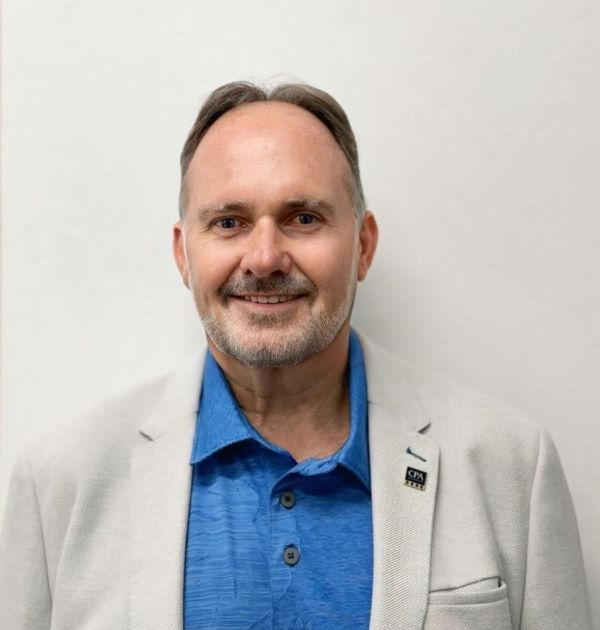
Christopher is a future-focused educator and global business leader committed to reshaping how people learn, upskill and succeed. Driven by innovation, he combines technology, digital learning design and real-world industry insight to build powerful, future-ready education solutions.
As Director General of the World Certification Institute and an experienced Company Director, he leads international initiatives that set global standards, strengthen professional capability, and open new pathways for learners across Asia and beyond. His work bridges education and enterprise — helping organisations transform their workforce and individuals gain the skills and confidence to thrive in a changing world.
With qualifications including BCom, GradDipEd, MBA, FCPA, WCMP and FWCI, I bring deep expertise in business strategy, financial governance and competency-based learning.
Christopher is passionate about using technology to enhance the learning journey, create equitable access to skills, and promote lifelong learning for all.
Our mission is simple: to empower people with the knowledge, tools and opportunities they need to succeed — today and into the future.
For any further details, please fill in the enquiry form below to reach us.


Reviews
There are no reviews yet.